Retainers
Are Ultrasonic Retainer Cleaners Worth It? (2026)
Key takeaways
- An ultrasonic retainer cleaner uses sound waves in water to lift plaque from places a brush can't reach.
- In lab research with Robert Gordon University researchers, ultrasound and UVC light together cut viable bacteria on aligners by 88.6% in 5 minutes and 99.7% in 10 minutes.
- It works best alongside daily rinsing and gentle brushing, not instead of it.
- Look for the right frequency, a short cycle and a design you'll actually use every day.
If you wear a retainer, aligners or a night guard, you've probably seen ultrasonic cleaners everywhere. But do they actually work, or are they just a gadget? Here's what the research says.
How does an ultrasonic retainer cleaner work?
An ultrasonic cleaner sends high-frequency sound waves through water. These create millions of microscopic bubbles that form and collapse against the surface of your retainer. This is called cavitation. The tiny bursts loosen plaque, bacteria and grime from every groove, without any scrubbing.
That matters because retainers and aligners are full of small ridges shaped around your teeth. A toothbrush cleans the smooth surfaces but often misses these grooves, which is where bacteria and smells build up.
What does the research show?
Lab research carried out with Robert Gordon University researchers in Aberdeen tested ultrasound (43kHz) and UVC light working together on clear aligners. The aligners were coated with a heavy layer of lab-grown oral bacteria, around 10 times more than you'd find after a normal day's wear.
Viable bacteria fell from an average count of 155 on uncleaned samples to 17.7 after 5 minutes, an 88.6% reduction. After 10 minutes, it fell to 0.5, a 99.7% reduction. The testing was carried out on an earlier corded Sonic Spa model with the same ultrasonic technology. Read the full research
Independent reviews point the same way. A 2022 systematic review in the journal Healthcare looked at cleaning methods for clear aligners. It found that combining a mechanical method with a chemical one appears most effective, though it also called for more research.
Is an ultrasonic retainer cleaner worth it?
For most people who wear an appliance every day, yes. Here's why:
- It reaches the grooves. Ultrasound cleans the places your brush misses.
- It's gentle. There's no scrubbing, so less risk of scratching the plastic and turning it cloudy.
- It's quick. Most cycles take a few minutes, so it fits into a morning routine.
- It saves money long term. A cleaner, clearer retainer is likely to last longer.
It's not a replacement for rinsing and brushing. Think of it as the deep clean that finishes the job.
How to choose the best retainer cleaner
- Frequency: look for a clearly stated ultrasonic frequency, ideally backed by testing.
- Cycle time: a short cycle means you'll actually use it every day.
- Cordless and compact: easier to keep by the sink or take travelling.
- Fits your appliance: check it holds retainers, aligners, dentures and guards.
- Guarantee: a decent money-back guarantee shows the brand stands behind it.
Common questions
Can ultrasonic cleaners damage retainers? Ultrasonic cleaning uses only water and sound waves, so there's no scrubbing. Always follow the instructions and use cool or room-temperature water, never hot.
Do I still need to brush my retainer? Yes. A quick rinse and gentle brush every day, with an ultrasonic deep clean, is the best routine.
Can I use it for dentures and mouth guards? Most ultrasonic cleaners work for any removable appliance that fits inside the tank.
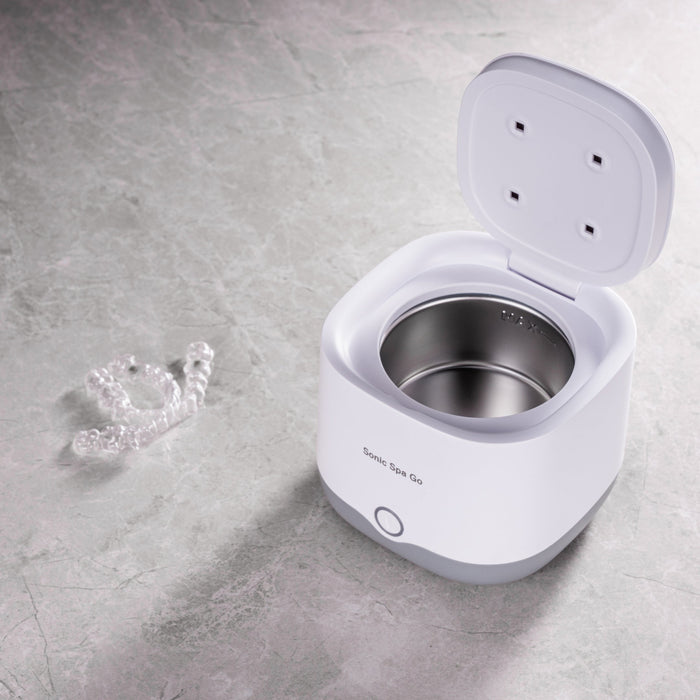
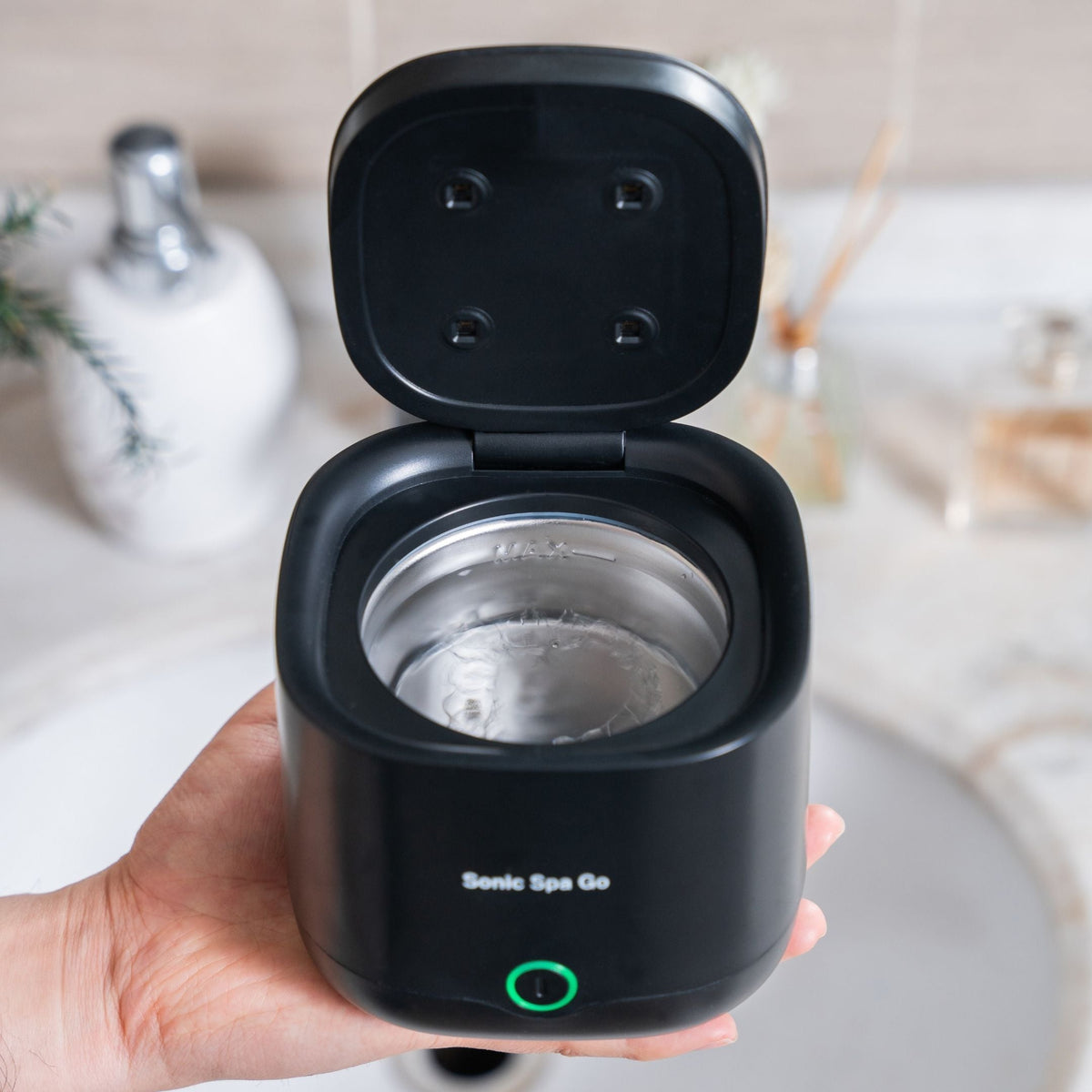
Shop the clean: Sonic Spa Go is a cordless ultrasonic cleaner with UVC light, a 3-minute cycle and a 100-day money-back guarantee.
Clean it properly
Sonic Spa Go ultrasonic cleaner
Cordless, compact and cleans with just water in a 3-minute cycle. Free UK delivery and a 100-day money-back guarantee.