Retainers
Retainer Cleaning Tablets: Are They Safe and Do You Need Them?
Key takeaways
- Retainer cleaning tablets add a chemical clean on top of rinsing and brushing.
- Research suggests combining a mechanical clean with a cleaning agent works better than either alone.
- Used as directed, tablets made for retainers and aligners are a safe extra step.
- Never use hot water, bleach or household cleaners on your retainer.
Retainer cleaning tablets are one of the most searched retainer products in the UK. But are they safe for your retainer, and do you actually need them? Here's what you need to know.
What do retainer cleaning tablets do?
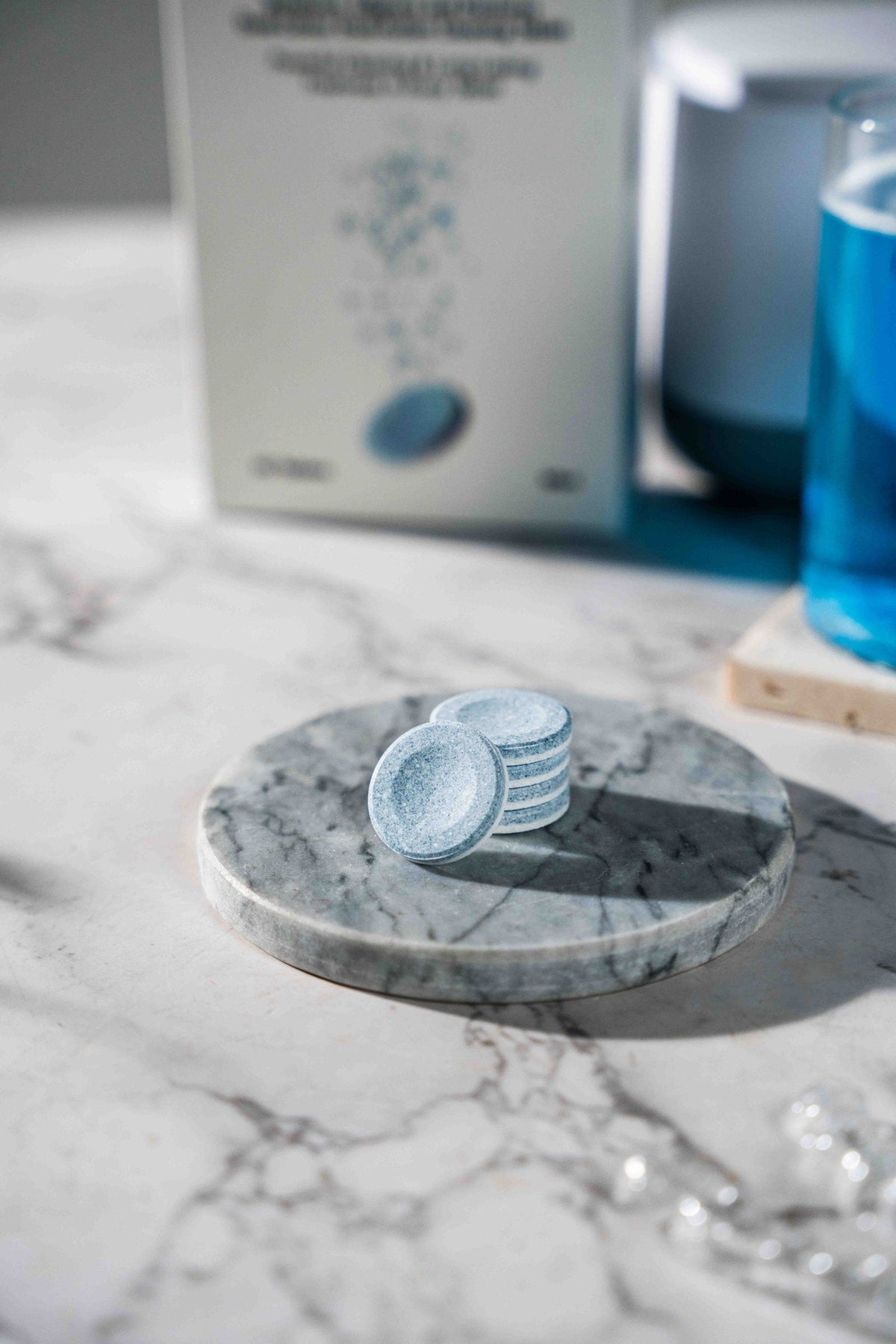
Cleaning tablets dissolve in water and release cleaning agents that help break down plaque, stains and odour-causing bacteria. Many fizz as they dissolve, which helps loosen grime from the surface of the plastic.
Are retainer cleaning tablets safe?
Tablets designed for retainers and aligners are generally a safe extra step when you follow the instructions on the pack. The main risks come from using the wrong product or the wrong method:
- Hot water: NHS orthodontic teams warn that hot water can warp or shrink a retainer so it no longer fits. Always dissolve tablets in cool or room-temperature water.
- Household products: never use bleach, mouthwash with alcohol or kitchen cleaners. They can damage and discolour the plastic.
- Leaving it too long: soak only for the time on the pack, then rinse thoroughly before wearing.
- Swallowing: tablets are for cleaning appliances only. Keep them away from children and never put them in your mouth.
Always check the ingredients if you have known sensitivities, and ask your dentist if you're unsure.
Do you actually need cleaning tablets?
You don't need them for every clean, but they can make a real difference. A 2022 systematic review of clear aligner cleaning, published in Healthcare, found that a protocol combining a mechanical clean with a chemical one appears to be the most effective approach.
In practice, that means:
- Every day: rinse and gently brush with liquid soap.
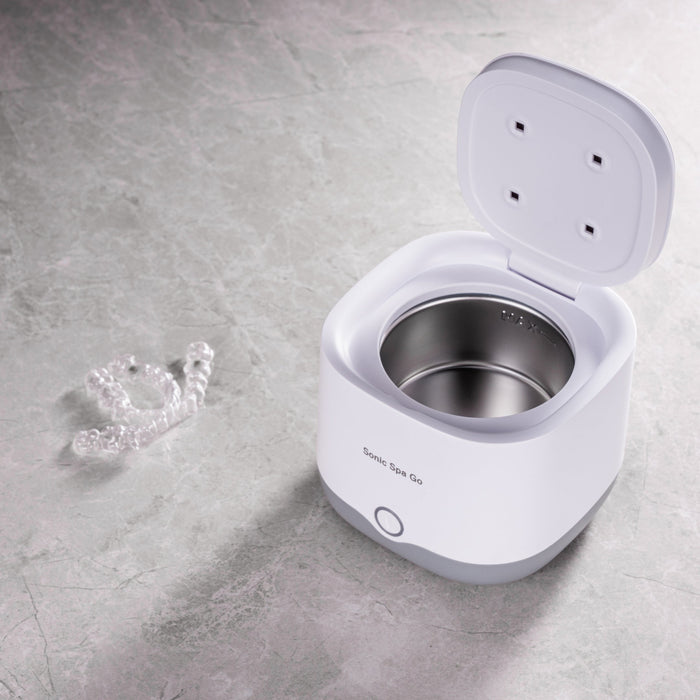
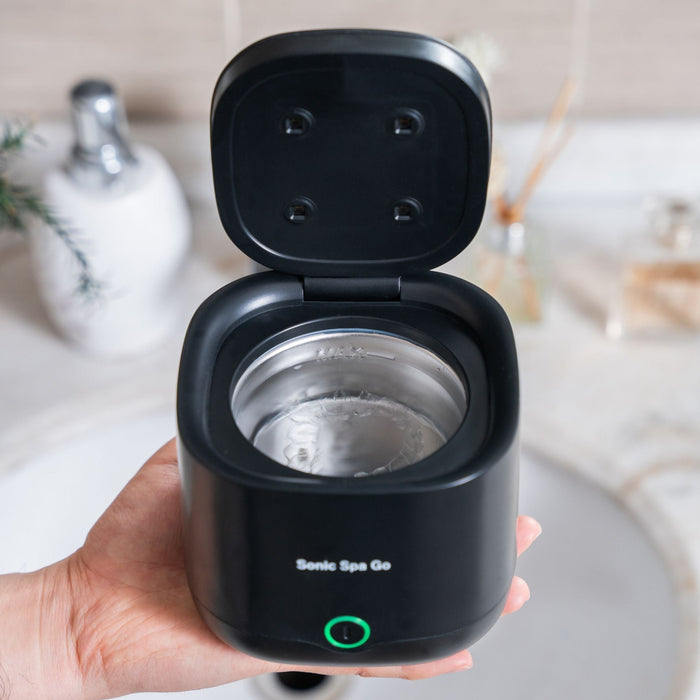
- Deep clean: an ultrasonic cleaner reaches the grooves a brush misses. In lab research with Robert Gordon University researchers, ultrasound and UVC light together cut viable bacteria on aligners by 88.6% after 5 minutes and 99.7% after 10 minutes. See the research
- Extra fresh: add a cleaning tablet to the ultrasonic clean for an extra-deep, fresh-smelling result.
How to use a cleaning tablet in an ultrasonic cleaner
- Fill the tank with cool water to the MAX line.
- Unwrap one tablet and drop it in. It will start to fizz.
- Add your retainer, aligners or guard, close the lid and start the cycle.
- Rinse your appliance under cool water before wearing.
Common questions
Can I use denture tablets on my retainer? Some denture cleaners are stronger than retainer cleaners. Check the pack says it's suitable for retainers or aligners.
How often should I use a cleaning tablet? Follow the pack instructions. Many people use one with each deep clean.
Can I use a cleaning tablet without an ultrasonic cleaner? Yes. Most tablets, including Boostab, can be dissolved in a glass or container of cool water to soak your appliance.
Will tablets make my retainer smell better? Yes, they help remove odour-causing bacteria, especially alongside an ultrasonic clean.
Shop the clean: Boostab cleaning tablets are made to pair with Sonic Spa Go, and work on their own in a glass of water too. Dual-action formula, fresh mint finish. Subscribe and save 15%.
Extra-deep clean
Boostab cleaning tablets
A dual-action, fresh mint formula made to pair with Sonic Spa Go. Subscribe and save 15%.