Research
The Research Behind Sonic Spa

Key takeaways
- Researchers at Robert Gordon University in Aberdeen tested ultrasound and UVC light working together to clean clear aligners.
- Viable bacteria fell by 88.6% after a 5-minute clean and by 99.7% after a 10-minute clean.
- The aligners were coated with a heavy layer of lab-grown oral bacteria, around 10 times more than you'd find after a normal day's wear.
- The longer the clean, the fewer viable bacteria were left behind.
We wanted to know how well ultrasonic cleaning really works on the appliances people wear in their mouths every day. So we worked with researchers at Robert Gordon University (RGU) in Aberdeen to put it to the test in a lab. Here's what they found, and what it means for your aligners, retainers or dentures.
Who carried out the research?
The research was carried out by a team at Robert Gordon University in Aberdeen, Scotland, in 2021. It was published as a main report and an additional report, both looking at how well ultrasound and UVC light clean clear aligners.
What was tested?
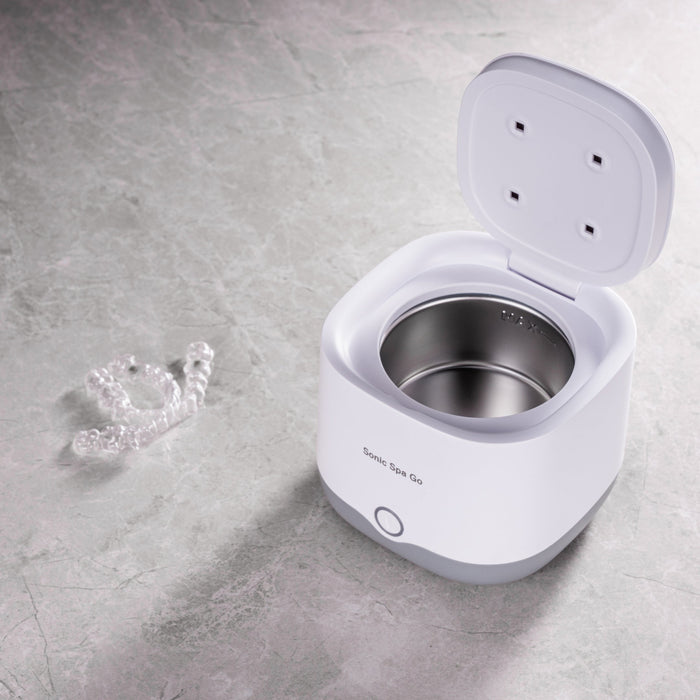
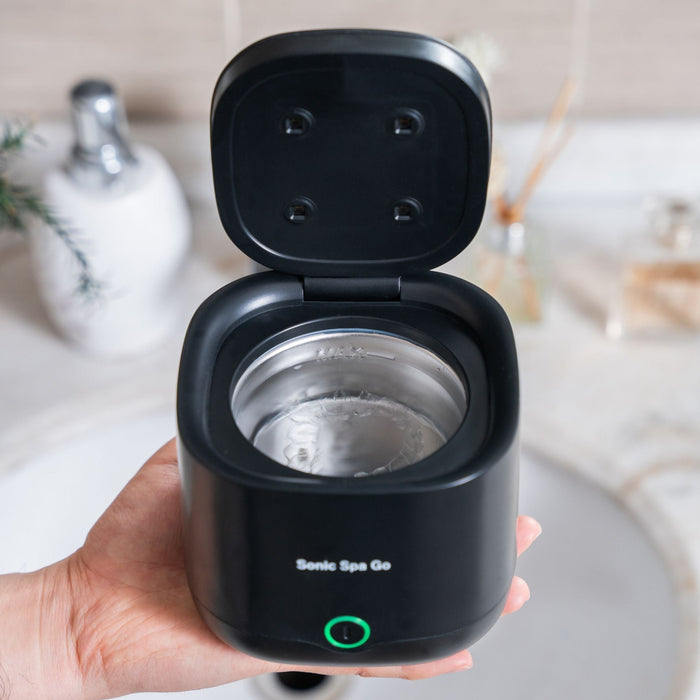
The team tested an earlier corded Sonic Spa ultrasonic cleaner. It ran at 43kHz, with four UVC lights (275nm) fitted into the lid. Our current Sonic Spa range uses essentially the same ultrasonic power and key technical specifications.
To mimic real plaque, the researchers grew oral bacteria in the lab, taken from six areas of the mouth and from saliva. They coated clear aligners with it and heat-fixed it so it stuck firmly. The aligners were then cleaned for 5 minutes and for 10 minutes, using ultrasound and UVC together with a mild cleaning solution.
The results were checked in three different ways, so no single test could skew them:
- a rapid swab test that shows whether bacteria and protein are left on a surface
- fluorescence spectroscopy, which measures how much residue remains
- fluorescence microscopy, which counts the living bacteria left on the aligner
Finding one: far fewer viable bacteria
Under the microscope, the team counted how many viable (living) bacterial colonies were left on each sample.
- Uncleaned: an average viability count of 155
- After 5 minutes: 17.7, an 88.6% reduction
- After 10 minutes: 0.5, a 99.7% reduction
Finding two: you can see the difference
The swab test changes colour depending on how much residue is left. Swabs from the 10-minute samples turned green, meaning clean. Swabs from the 5-minute samples showed a pale purple, meaning much less residue than the uncleaned aligner, but still some left.
The main report measured visible plaque too. A 5-minute clean reduced it by 47%, and a 10-minute clean by 82%. Both reports point the same way: the longer the clean, the cleaner the aligner.
Finding three: ultrasound and UVC work well together
Ultrasonic cleaners send sound waves through water. These create millions of tiny bubbles that collapse against the surface and lift away build-up from every groove. This is called cavitation. At the same time, UVC light shines down on the appliance from the lid.
The researchers concluded that combining ultrasound with UVC light was an effective way to clean clear aligners, and a suitable method for daily use.
What this means for you
Brushing cleans the smooth surfaces of a retainer or aligner, but bacteria hide in the tiny grooves shaped around your teeth. Ultrasonic cleaning reaches those grooves without scrubbing, so there's less risk of scratching the plastic and turning it cloudy.
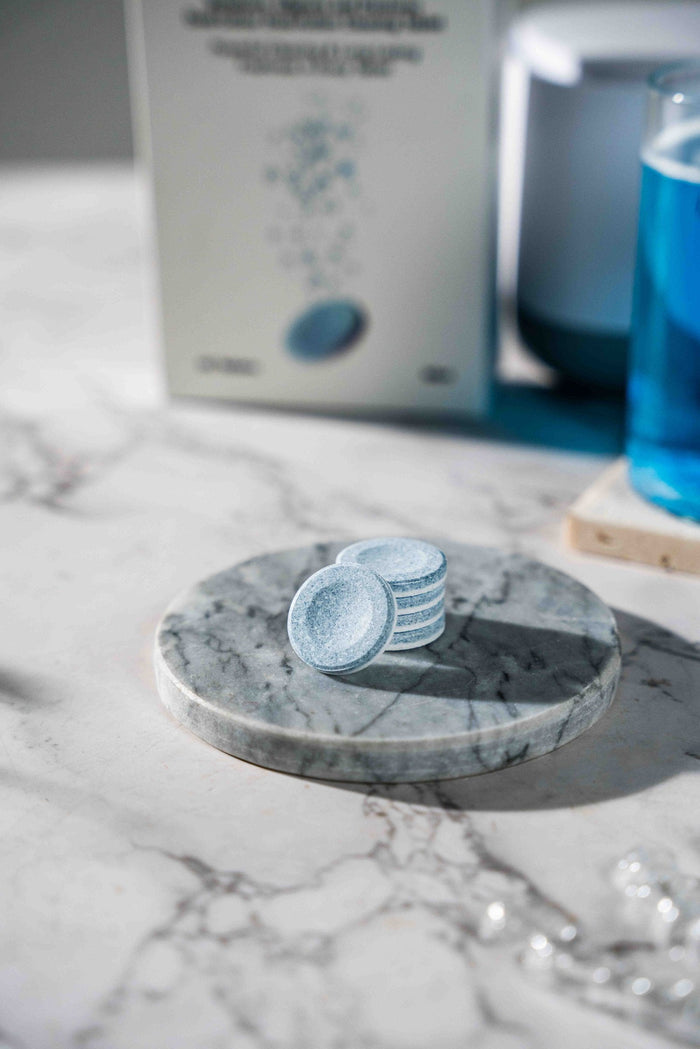
The lab test was deliberately tough, with around 10 times more bacteria than normal daily wear. Sonic Spa Go uses the same combination of ultrasound and UVC in a standard 3-minute cycle, designed for quick everyday cleaning. For a deeper clean, run an extra cycle or add a Boostab tablet.
A note on the research
This was a lab study, carried out on an earlier corded model and on aligner samples rather than inside people's mouths. It isn't a clinical trial. Our current Sonic Spa range has also been tested by an independent laboratory. Daily rinsing and gentle brushing still matter, and ultrasonic cleaning works best as part of a simple routine. You can read more in our guide on how to clean a retainer.
Common questions
Did RGU test the Sonic Spa Go? They tested our original corded ultrasonic cleaner. Sonic Spa Go uses essentially the same ultrasonic power and key technical specifications, in a cordless design.
Does Sonic Spa Go use UVC light? Yes. Ultrasound and UVC work together during every cleaning cycle.
How long is a cleaning cycle? The standard cycle is 3 minutes. The 99.7% result was recorded after 10 minutes in the lab test.
Shop the clean: Sonic Spa Go cleans with ultrasound and UVC in a 3-minute cycle. Add Boostab for an extra-deep, minty-fresh clean.
Clean it properly
Sonic Spa Go ultrasonic cleaner
Cordless, compact and cleans with just water in a 3-minute cycle. Free UK delivery and a 100-day money-back guarantee.