Aligners
How to Clean Invisalign and Clear Aligners (2026 Guide)
Key takeaways
- Clear aligners need cleaning every time you take them out, because they hold saliva and bacteria against your teeth for up to 22 hours a day.
- Use cool water and a soft brush. Avoid toothpaste and hot water.
- Research suggests a mechanical clean plus a cleaning agent works best.
- Ultrasonic cleaning reaches the grooves without scrubbing, which helps keep aligners clear.
Clear aligners only stay invisible if they stay clean. Because you wear them for most of the day, plaque and bacteria build up fast, which can make them cloudy, stained and smelly. Here's how to clean Invisalign and other clear aligners properly.
Why cleaning your aligners matters
Aligners fit tightly over your teeth, so anything left on them is held against your teeth and gums for hours. A dirty aligner can affect your breath, stain more easily and look far less invisible.
Daily routine for cleaning aligners
- Rinse every time you take them out. Use cool running water so saliva doesn't dry on.
- Brush your teeth before putting them back in. Otherwise food gets trapped against your teeth.
- Brush the aligners gently. Use a soft toothbrush with clear liquid soap. NHS orthodontic advice warns that toothpaste can scratch clear plastic and make it cloudy.
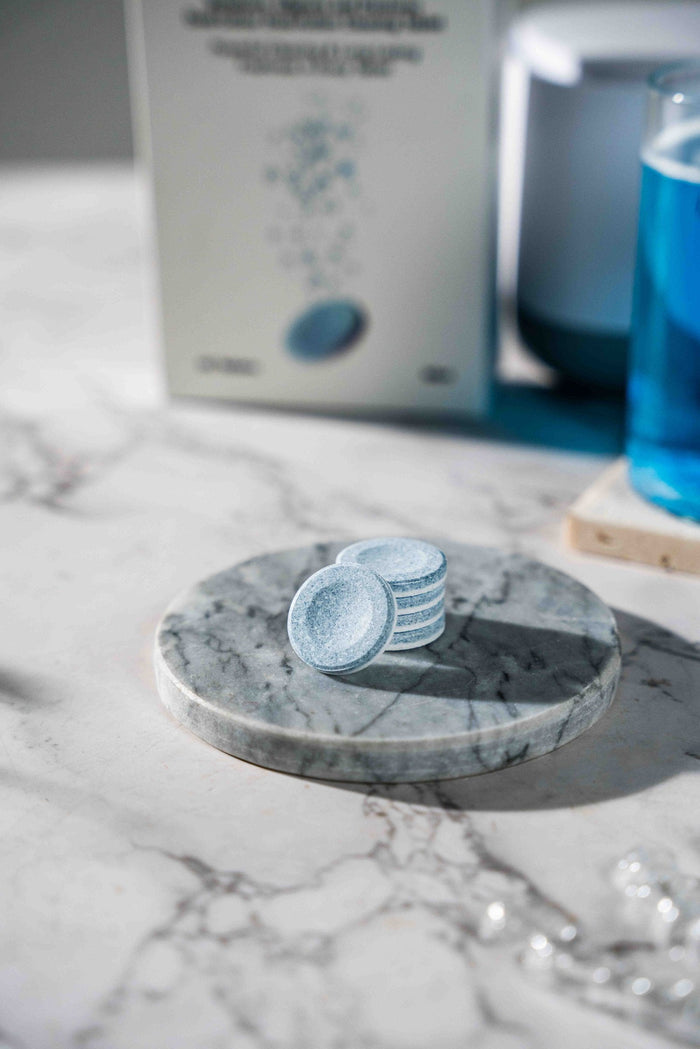
- Deep clean them. Use cleaning crystals, tablets or an ultrasonic cleaner at least once a day.
- Store them in their case. Never wrap them in tissue.
What to avoid
- Hot water: it can warp the plastic so your aligners stop fitting, which can affect your treatment.
- Toothpaste: it's mildly abrasive, so it leaves scratches that trap bacteria.
- Coloured or sugary drinks while wearing them: take aligners out for anything other than plain water.
- Harsh chemicals: bleach, alcohol mouthwash and household cleaners can damage them.
Invisalign cleaning crystals vs ultrasonic cleaning
Cleaning crystals dissolve in water and soak your aligners for around 15 minutes. They're a chemical clean. An ultrasonic cleaner is a mechanical clean, using sound waves to lift dirt from every groove.
A 2022 systematic review in the journal Healthcare found that combining a mechanical method with a chemical one appears most effective for cleaning clear aligners. So the best routine uses both: an ultrasonic clean with a cleaning tablet added.
In lab research with Robert Gordon University researchers, ultrasound (43kHz) and UVC light used together reduced viable bacteria on clear aligners by 88.6% after 5 minutes and 99.7% after 10 minutes. Read the research
Common questions
How often should I clean my aligners? Rinse every time you remove them and deep clean at least once a day.
Why are my aligners cloudy? Usually plaque, mineral build-up or scratches. Regular deep cleaning and avoiding toothpaste helps.
Can I clean aligners while I'm out? A quick rinse is fine. A cordless ultrasonic cleaner makes a proper clean easy when travelling.
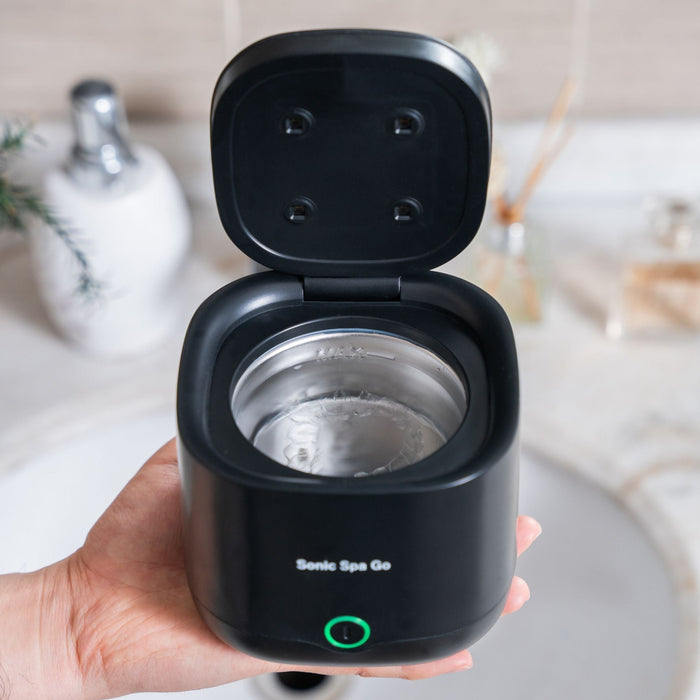
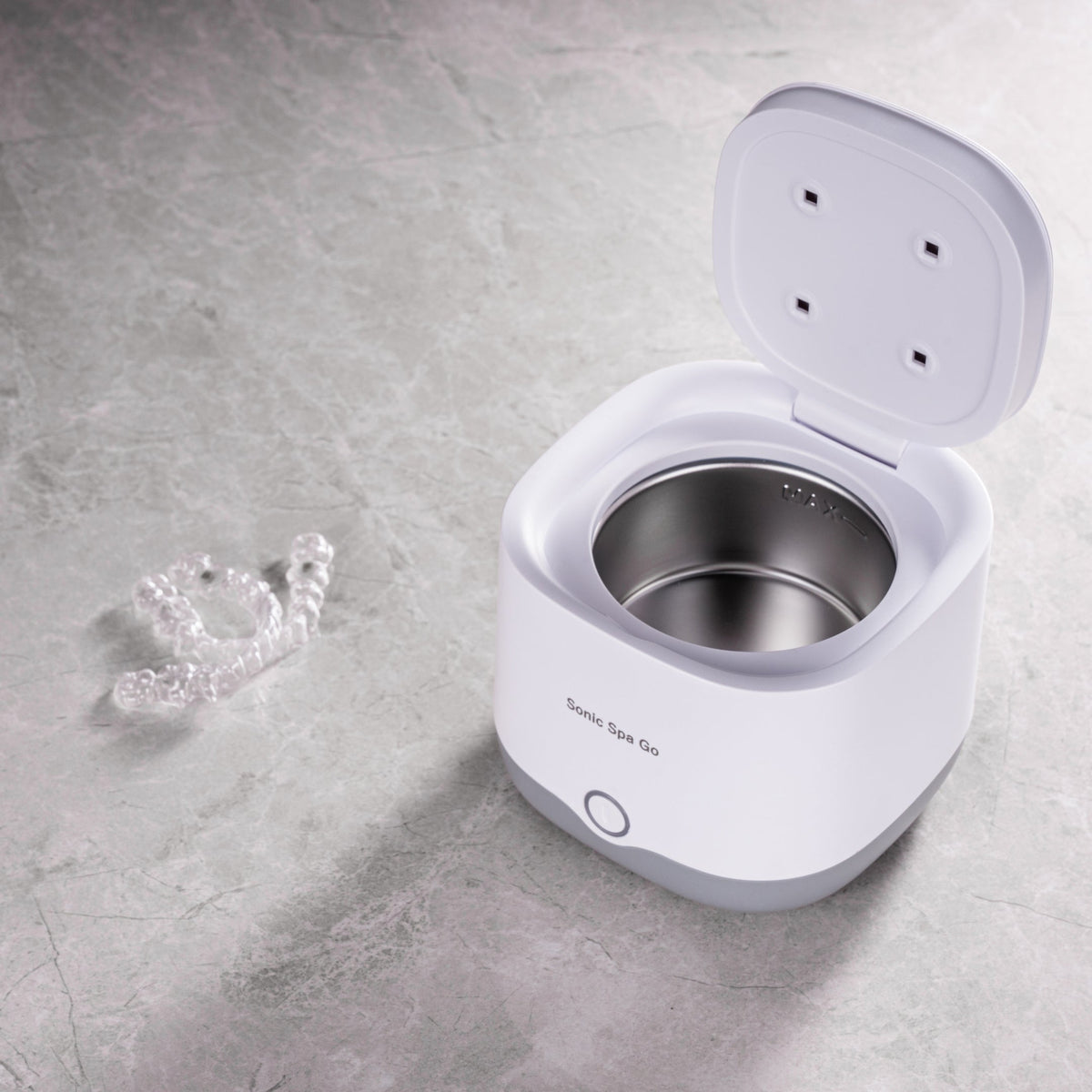
Shop the clean: Sonic Spa Go is a cordless cleaner that uses ultrasound and UVC in a 3-minute cycle, with just water. Add Boostab for an extra-deep, minty-fresh clean.
Clean it properly
Sonic Spa Go ultrasonic cleaner
Cordless, compact and cleans with just water in a 3-minute cycle. Free UK delivery and a 100-day money-back guarantee.